

Your kitchen holds a strange kind of tension. You want it calm, yet it somehow ends up cluttered by Tuesday morning. You crave warmth, but sleek modern kitchens often feel cold and sterile instead.
That gap between what you picture and what you actually live in has a name few people know: Japandi. This design style merges Japanese simplicity with Scandinavian warmth, creating a kitchen that finally feels both peaceful and useful. The following ideas show exactly how that balance works in real homes.
1. Open Wood Shelving for Warm Minimalism
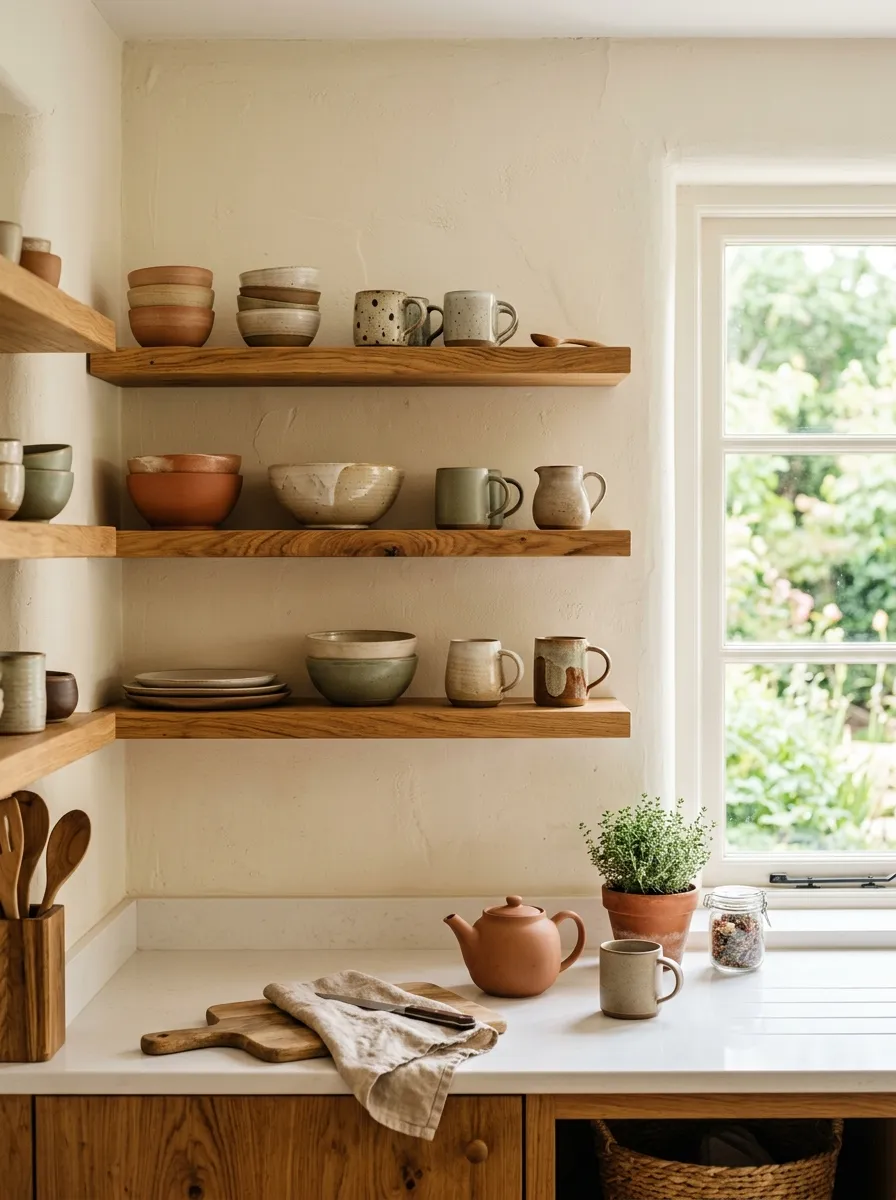
Swap a few upper cabinets for open oak shelving to instantly soften the room. This Japandi kitchen design move keeps the space breathable while giving your favorite ceramics a quiet stage to shine.
Keep only a handful of items on display, choosing pieces with similar tones. This restraint is the real secret behind Japandi style kitchens that feel curated instead of cluttered, calm instead of chaotic.
2. Two-Tone Cabinetry with Matte Black and Oak

Pair matte black lower cabinets with warm oak uppers for a grounded, balanced look. This contrast is a signature of Japandi kitchen design, blending Japanese boldness with Scandinavian softness in one cohesive palette.
Matte finishes hide fingerprints better than glossy ones, which matters in a busy family kitchen. This two-tone approach also visually lowers the ceiling height, making a large kitchen feel cozier and more inviting.
3. Hidden Appliances Behind Paneled Fronts
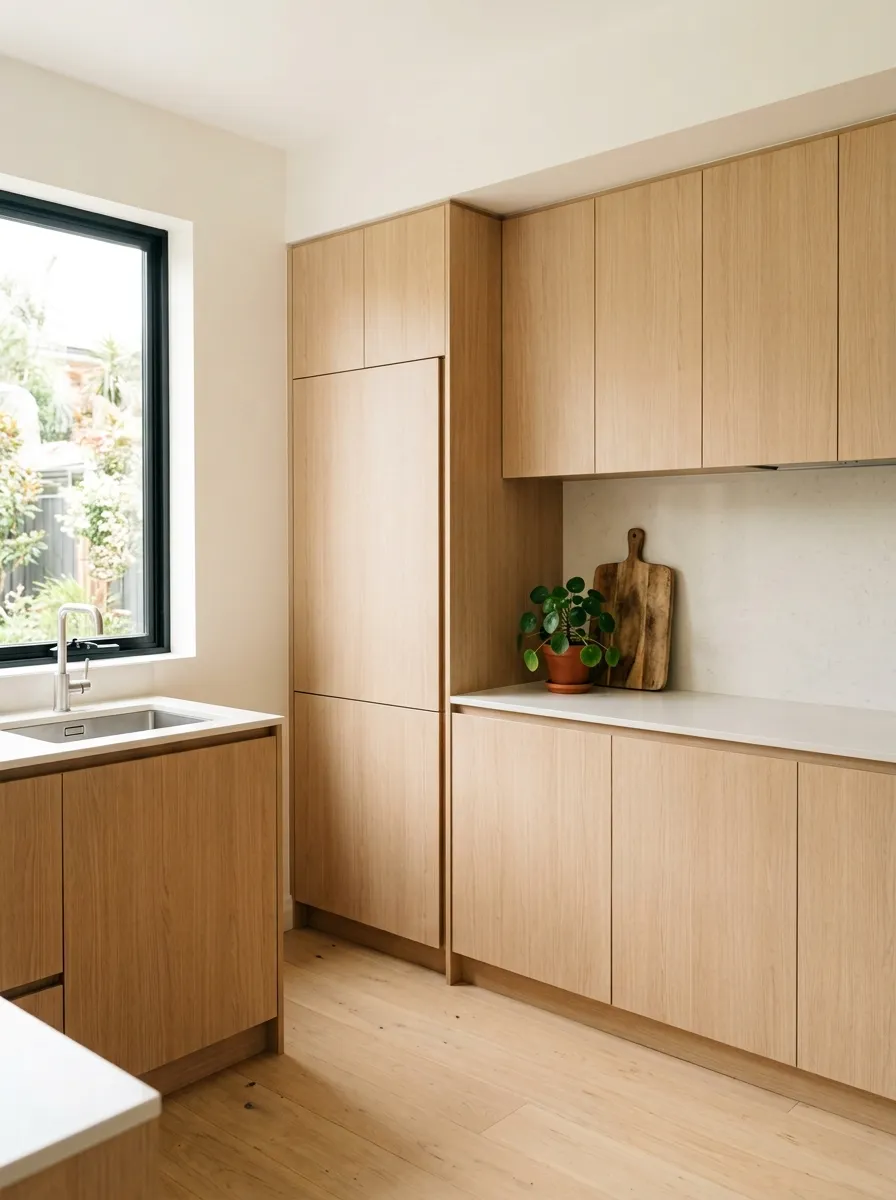
Conceal your fridge and dishwasher behind cabinet-matched panels so nothing breaks the visual flow. This trick is central to Japandi kitchen design, where every surface works together toward one calm, unified look.
Without bulky appliance fronts pulling focus, the eye can rest on natural textures like wood grain and stone. The result feels less like a showroom and more like a genuinely peaceful place to cook.
4. Handmade Stoneware as Everyday Decor
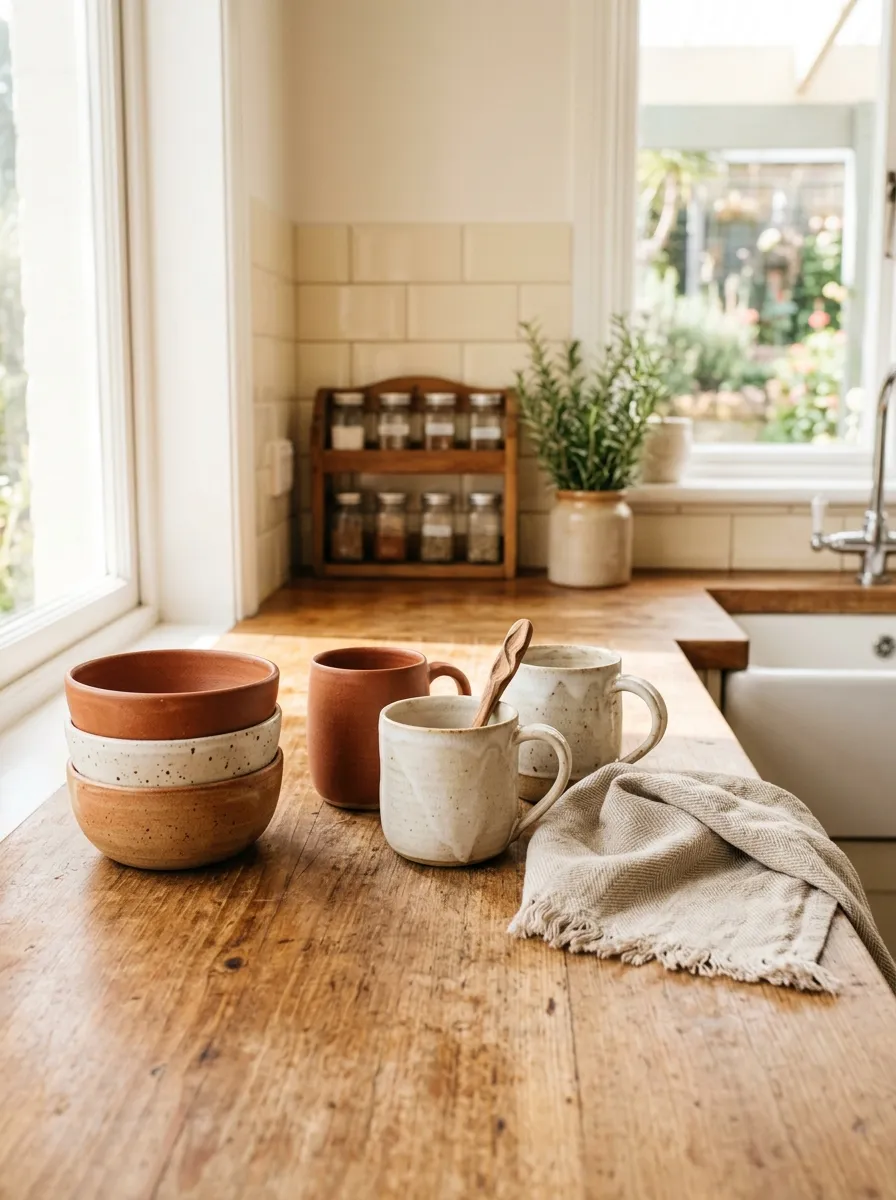
Let a small collection of handmade mugs and bowls double as decoration on open shelves or countertops. This is a favorite Japandi kitchen design trick, since imperfect ceramics add warmth without adding clutter.
Choose pieces in earthy, muted tones so they blend rather than compete for attention. Using the same items daily also means beauty and function live side by side, rather than storage getting sacrificed for style.
5. Layered Lighting for a Softer Glow
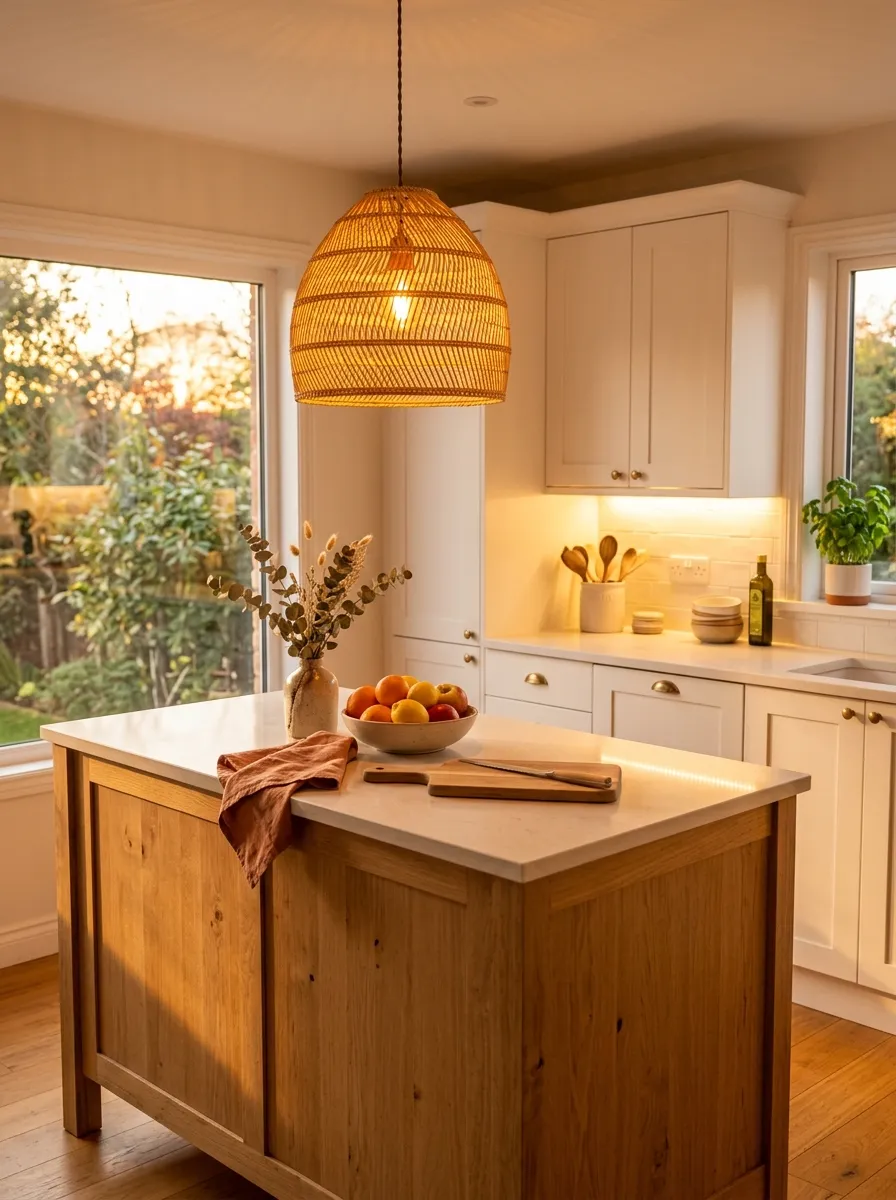
Combine a warm pendant light above the island with subtle under-cabinet strips for layered brightness. This lighting approach is essential in Japandi kitchen design, since harsh overhead bulbs can flatten the whole mood.
Choose bulbs with a warm color temperature instead of stark white light for a cozier evening feel. Paired with daylight from a window, this creates a space that looks inviting morning, noon, and night.
6. Textured Zellige Tile Backsplash
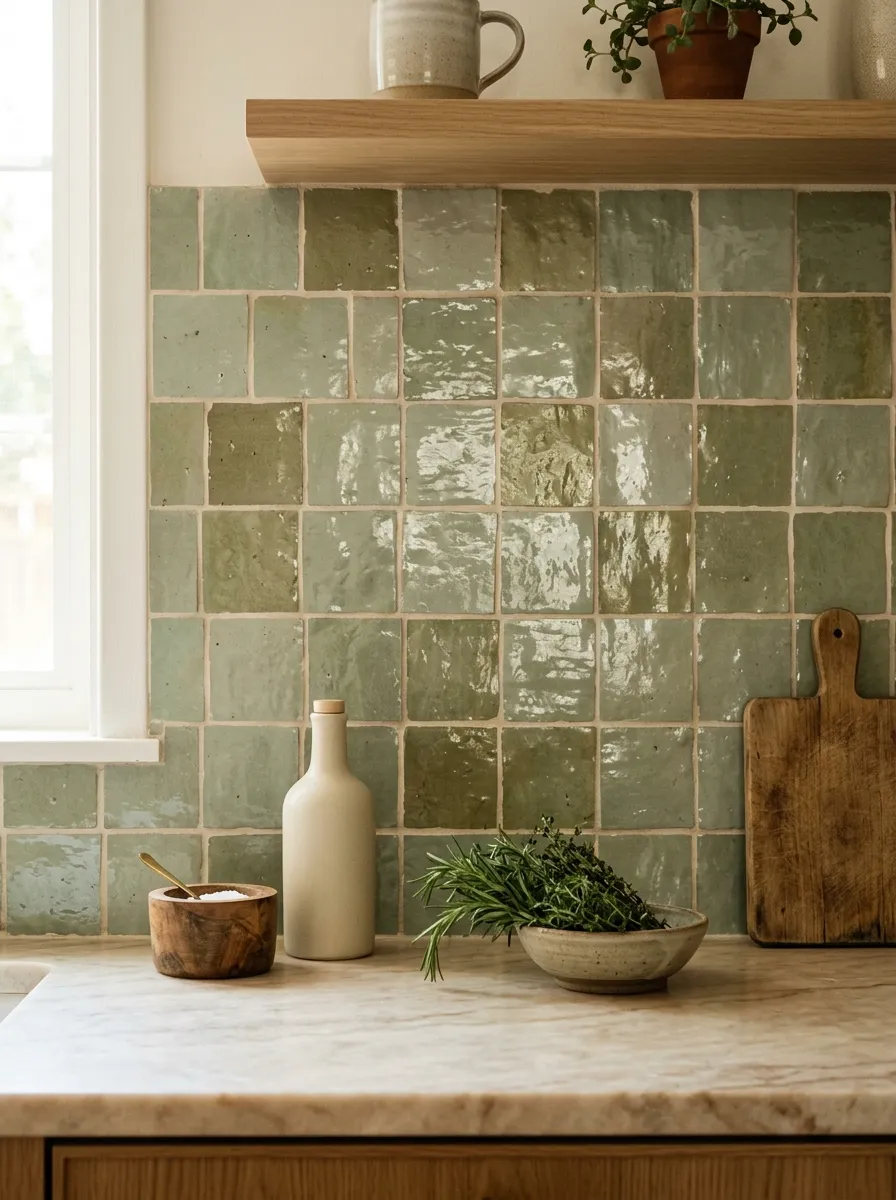
Choose handmade zellige tiles in soft sage or clay tones for a backsplash with subtle texture and depth. This detail brings genuine character to Japandi kitchen design, since the slight irregularities in each tile catch light differently throughout the day.
Keep the surrounding cabinetry plain so the tile becomes the natural focal point. This balance between one textured feature and calm surroundings is exactly what makes Japandi style kitchens feel intentional rather than overdone.
7. Indoor Greenery as a Living Accent
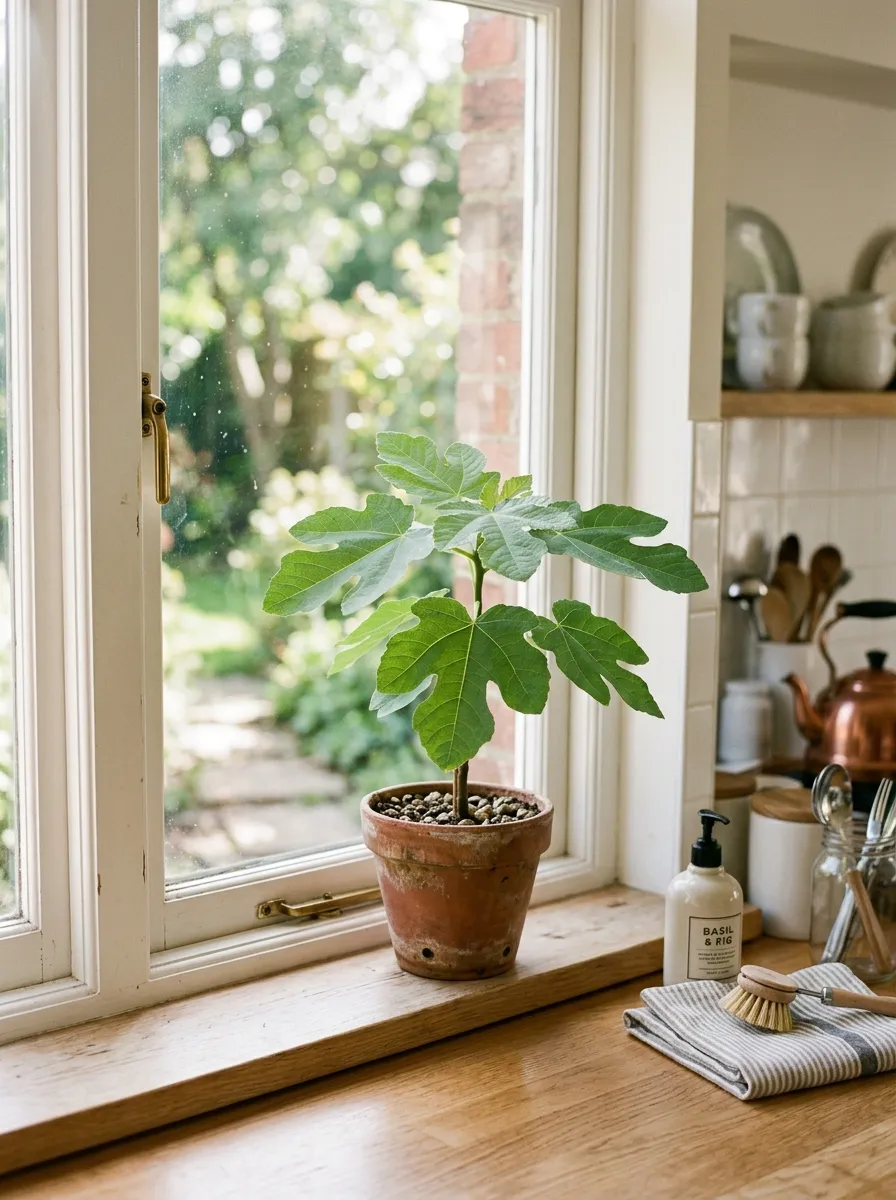
Add one or two potted plants like a small fig tree or trailing pothos near a window to bring life into the space. Greenery is an easy, budget-friendly way to soften a Japandi kitchen design without adding visual clutter or extra maintenance.
Choose simple terracotta or stoneware pots that match your existing palette. A single well-placed plant does more for warmth and freshness than several scattered ones, keeping the room feeling both organized and alive.
8. Rattan and Woven Texture Accents
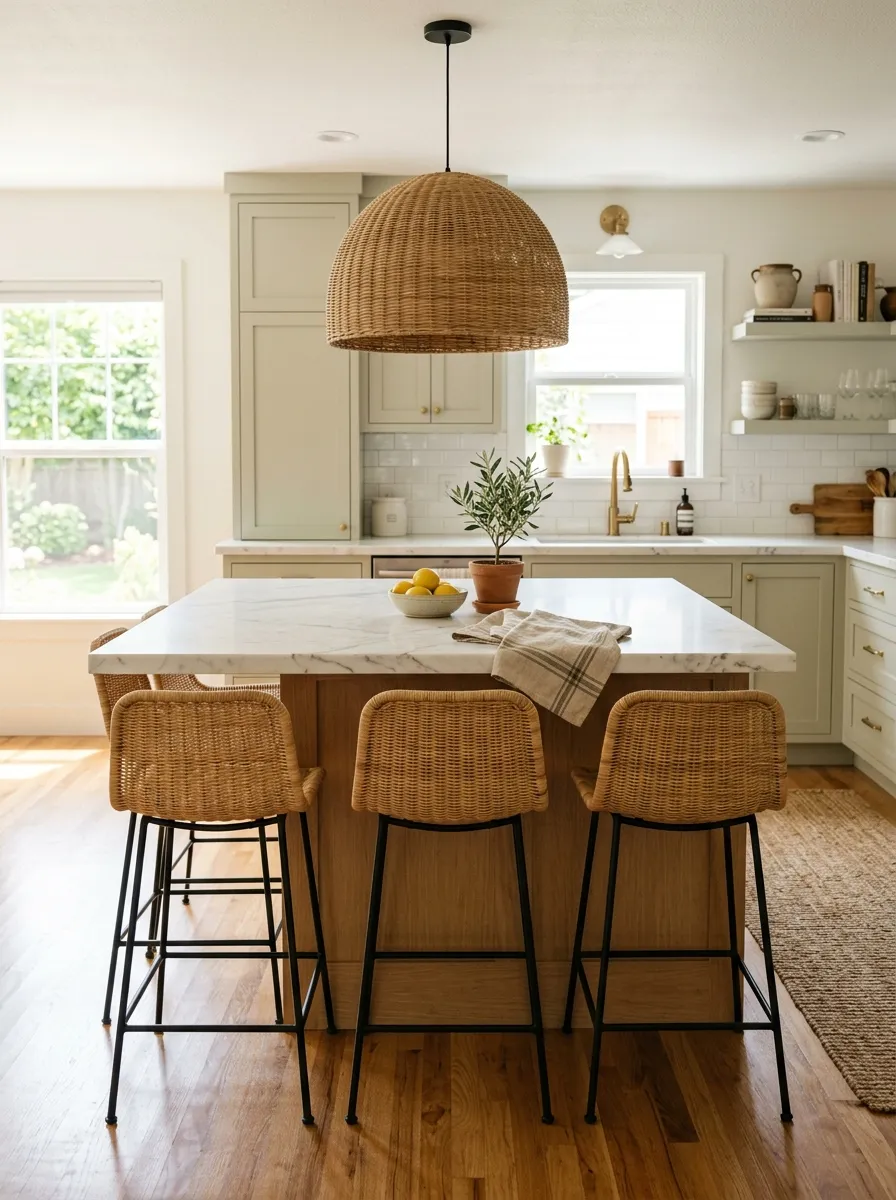
Introduce woven rattan bar stools or a pendant light shade to add tactile warmth without heavy patterns. This natural texture is a subtle but powerful move in Japandi kitchen design, softening hard lines from cabinetry and countertops.
Pair rattan with linen or cotton textiles nearby, like a folded towel or table runner, to reinforce the organic feel. These small woven details make Japandi style kitchens feel handcrafted and personal rather than mass-produced.
9. Sliding Shoji-Inspired Pantry Doors
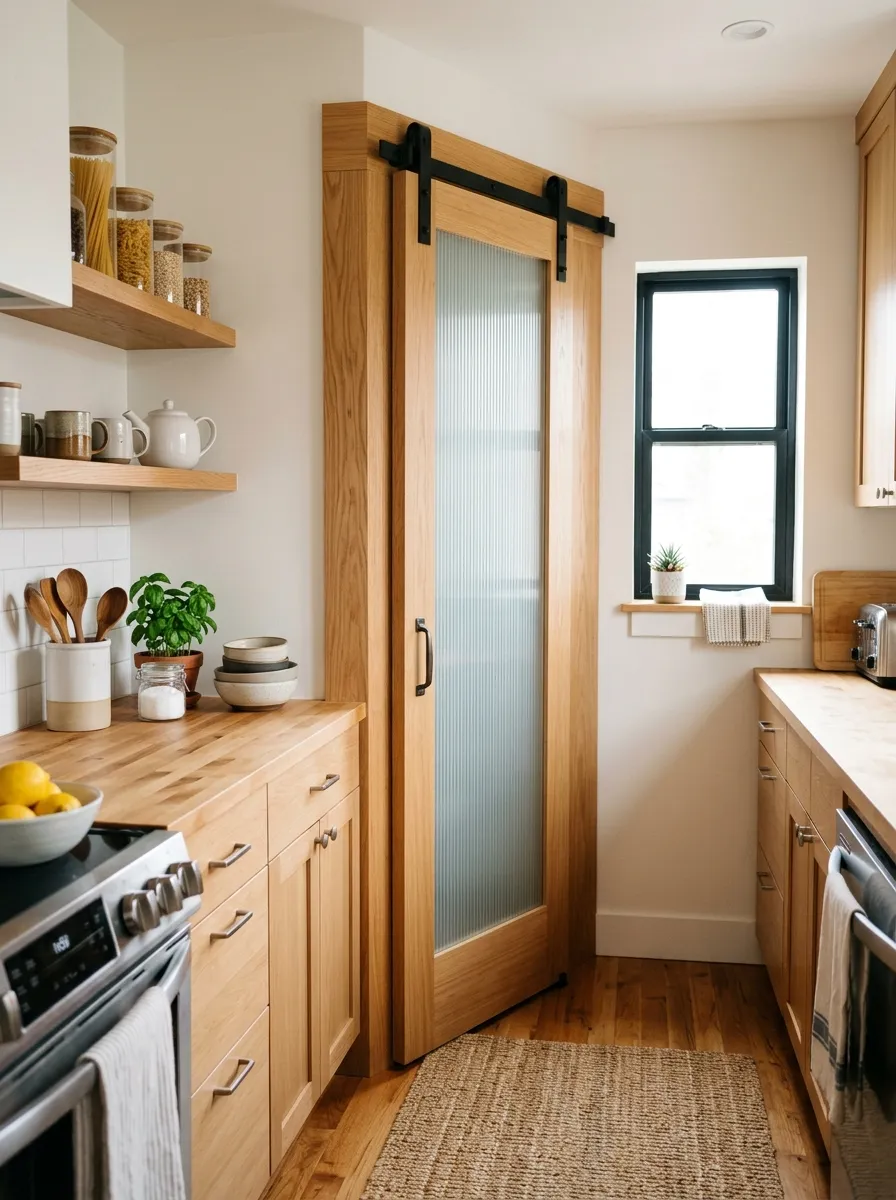
Replace a bulky pantry door with a sliding shoji-style panel featuring a wood frame and frosted or ribbed glass. This feature nods directly to the Japanese half of Japandi kitchen design while saving valuable floor space in smaller layouts.
The soft diffused light through the panel adds a gentle glow without fully hiding what is inside. It is a functional upgrade that also becomes a striking visual moment the moment guests walk in.
10. A Dedicated Tea and Coffee Ritual Corner
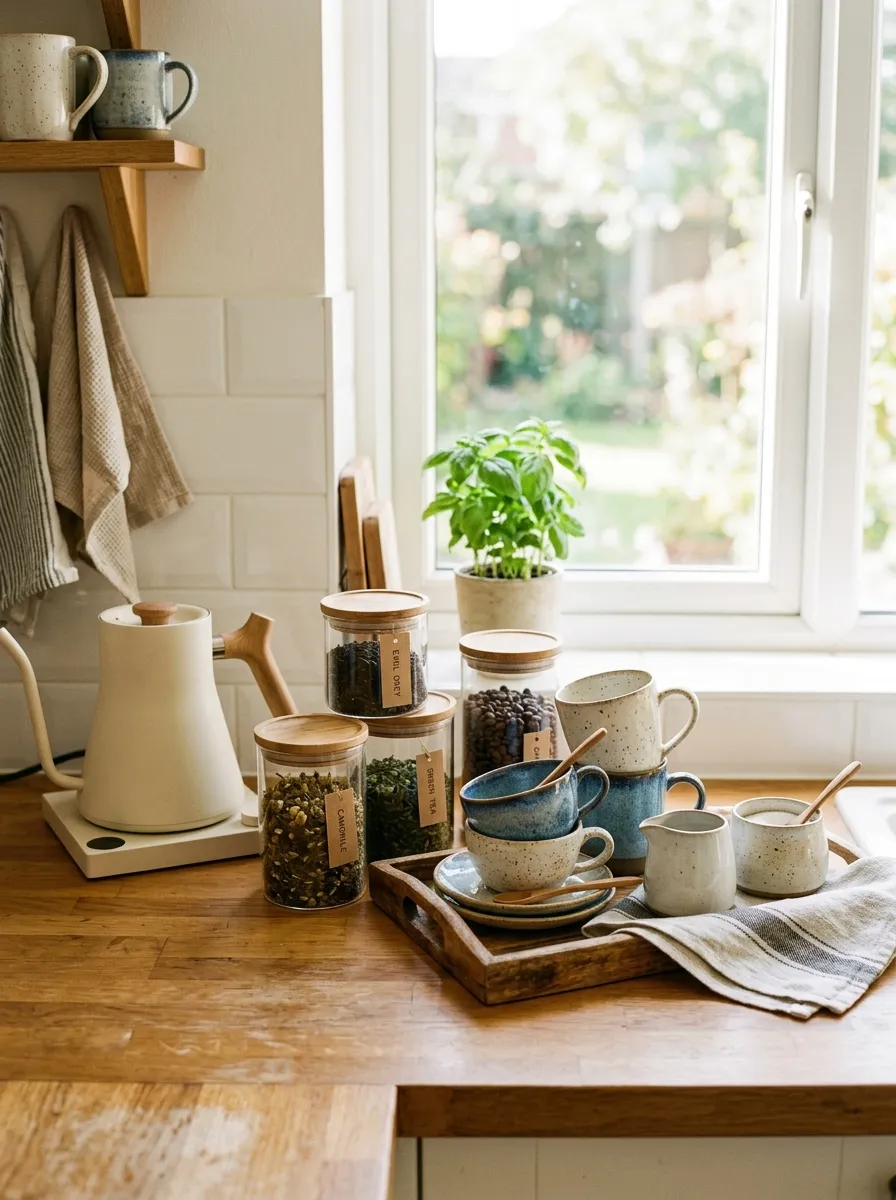
Set aside a small counter section with a kettle, a few glass jars, and simple cups for a slow morning ritual. This kind of purposeful corner captures the heart of Japandi kitchen design, where daily routines become moments of calm.
Keep the station limited to only what you use often, storing extras out of sight. A focused, uncluttered tea corner turns an ordinary kitchen habit into something worth looking forward to each day.
11. Sunken or Recessed Dining Nook

Carve out a slightly recessed or step-down dining corner near the kitchen for a cozy, intentional eating space. This architectural touch adds depth to Japandi kitchen design, separating the cooking zone from the gathering zone without needing walls.
Furnish it with a low wooden table and simple cushioned seating for a grounded, casual feel. This layout encourages slower meals and quiet conversation, reinforcing the calm, mindful atmosphere Japandi homes are known for.
12. Curved Kitchen Island Edges

Choose a kitchen island with softly rounded corners instead of sharp right angles for a gentler, more organic silhouette. This subtle shift is gaining popularity in Japandi kitchen design because it eases movement through tight spaces while softening the room visually.
Pair the curved edge with a warm wood or matte stone finish to keep the look cohesive. Rounded islands also feel safer for busy households with kids, blending practicality with the style’s signature soft aesthetic.
13. Concealed Trash and Recycling Drawers
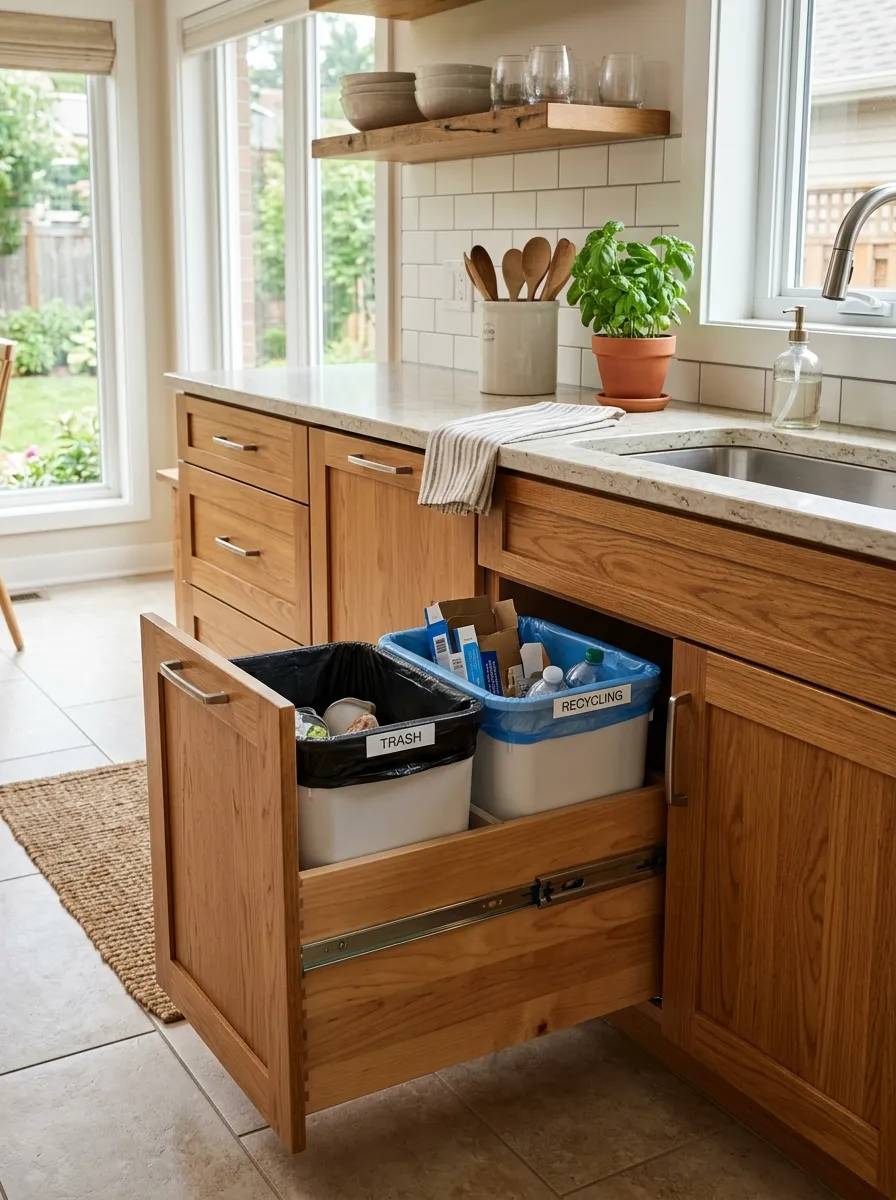
Install a pull-out drawer system for trash and recycling directly beneath the counter instead of leaving bins exposed. This unglamorous but essential upgrade is what makes Japandi kitchen design actually livable, not just beautiful in photos.
Hidden waste storage keeps odors and mess out of sight, preserving the clean lines the style depends on. It is proof that the most functional choices are often what make a minimalist kitchen sustainable long term.
14. Natural Stone Countertops with Visible Veining

Select a honed marble or quartzite countertop with soft, visible veining instead of a flat solid color. The subtle movement in the stone adds quiet visual interest to Japandi kitchen design without disrupting its overall sense of calm.
A honed, matte finish suits the style better than a glossy polish, keeping reflections soft rather than harsh. This natural material choice grounds the kitchen, connecting the space back to the earthy philosophy Japandi is built on.
15. Low-Profile Floating Cabinetry

Mount lower cabinets or a slim console with a floating design that leaves a visible gap above the floor. This detail makes the entire kitchen feel lighter and more spacious, a small architectural trick often used in modern Japandi kitchen design.
The exposed floor space beneath also makes cleaning easier and adds a subtle sense of openness to smaller kitchens. It is a simple structural choice that quietly reinforces the style’s core idea of doing more with less.
16. A Single Statement Pendant Over the Sink
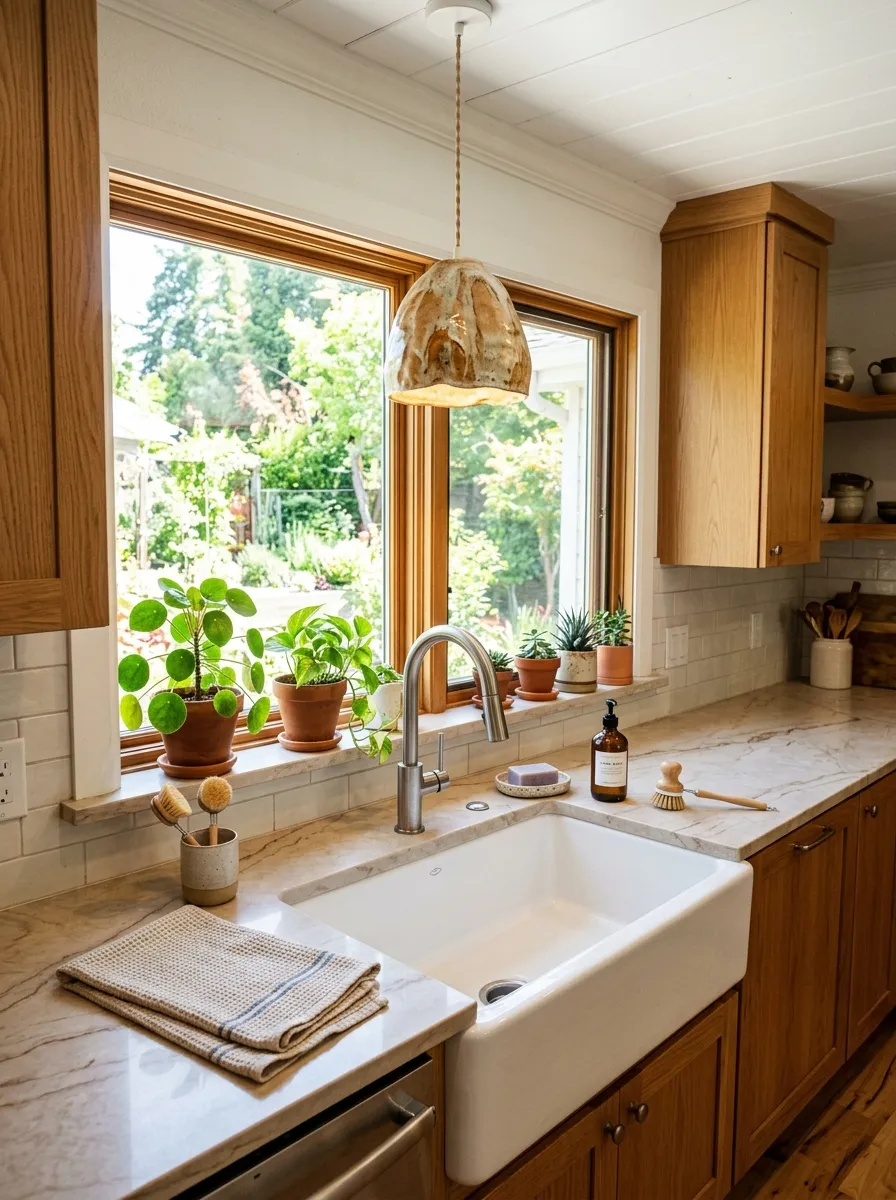
Hang one sculptural pendant light directly above the kitchen sink instead of relying only on recessed ceiling lights. This small focal point adds personality to Japandi kitchen design without overwhelming the room’s overall sense of restraint.
Choose a shade in matte ceramic, paper, or woven material to keep the warmth consistent with the rest of the space. A single well-placed light fixture often does more visual work than an entire wall of decor.
17. Mixed Wood Tones for Depth

Combine two complementary wood tones, like light oak flooring with a darker walnut island, instead of matching everything exactly. This layered approach keeps Japandi kitchen design from feeling flat, adding richness while staying within a calm natural palette.
The key is choosing woods with similar undertones so the mix reads as intentional rather than mismatched. Done well, this technique gives the kitchen a collected, lived-in warmth that a single wood tone alone cannot achieve.
18. Integrated Herb Garden Ledge
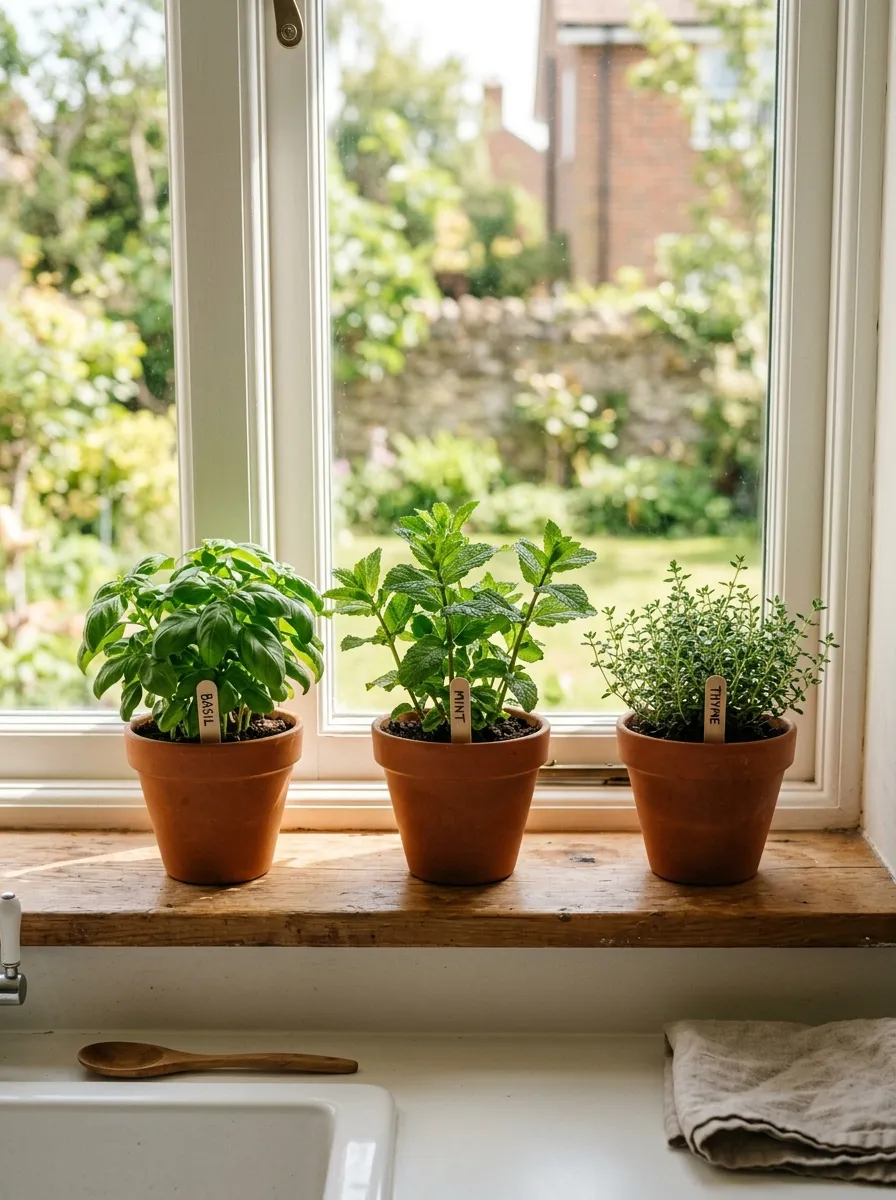
Build a narrow ledge or windowsill specifically for potted herbs like basil, mint, and thyme near the cooking area. This functional detail turns a decorative element into a genuine kitchen tool, a practical layer often missing from Japandi kitchen design boards online.
Use matching terracotta pots for visual consistency and easy reach while cooking. Fresh herbs within arm’s length also encourage healthier, more flavorful meals, blending the style’s aesthetic goals with everyday practicality.
19. Matte Black Faucet as a Grounding Detail
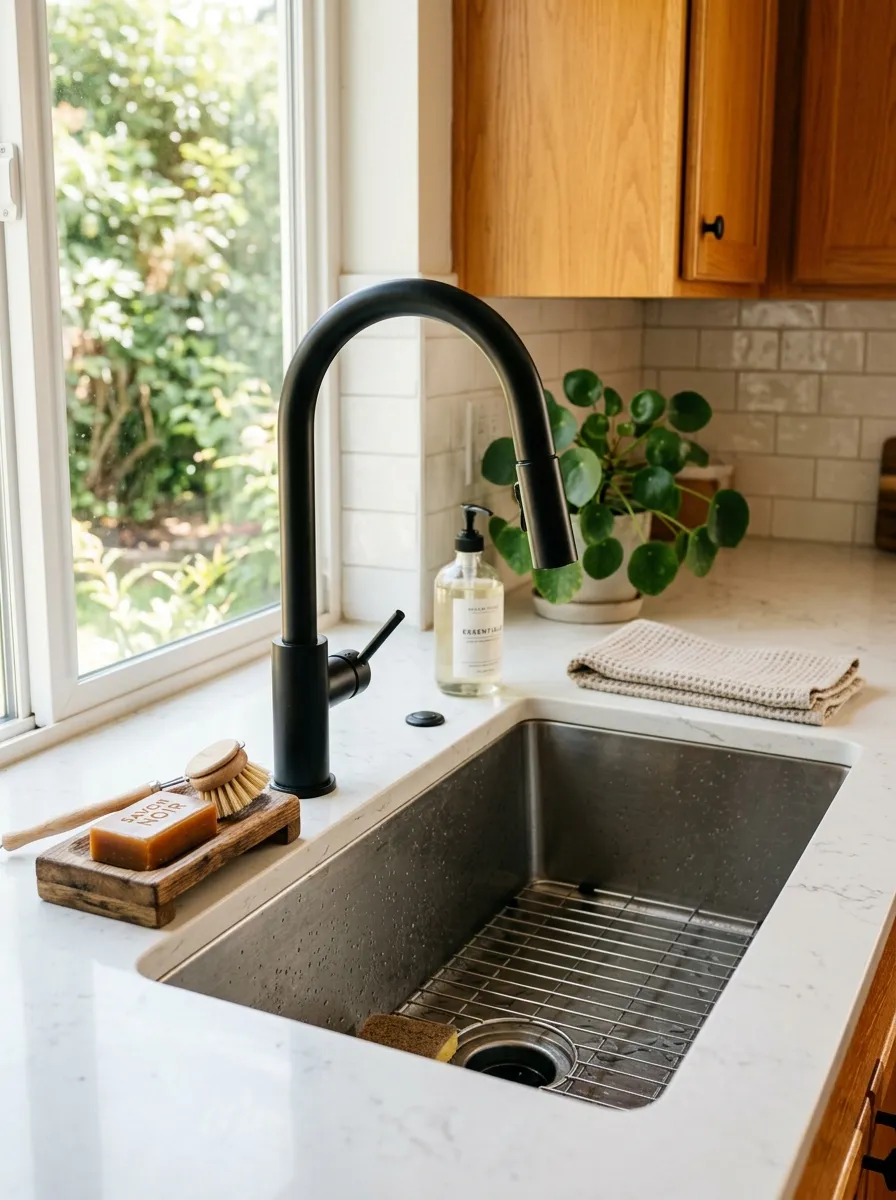
Swap a polished chrome faucet for a matte black one to add quiet contrast against light wood and pale walls. This single hardware change is an affordable way to sharpen the look of any Japandi kitchen design without a full renovation.
Matte black also shows fewer water spots than chrome, keeping the sink area looking clean with less daily upkeep. It is a small detail with outsized impact, anchoring the whole room’s color story in one fixture.
20. Woven Baskets for Open Storage
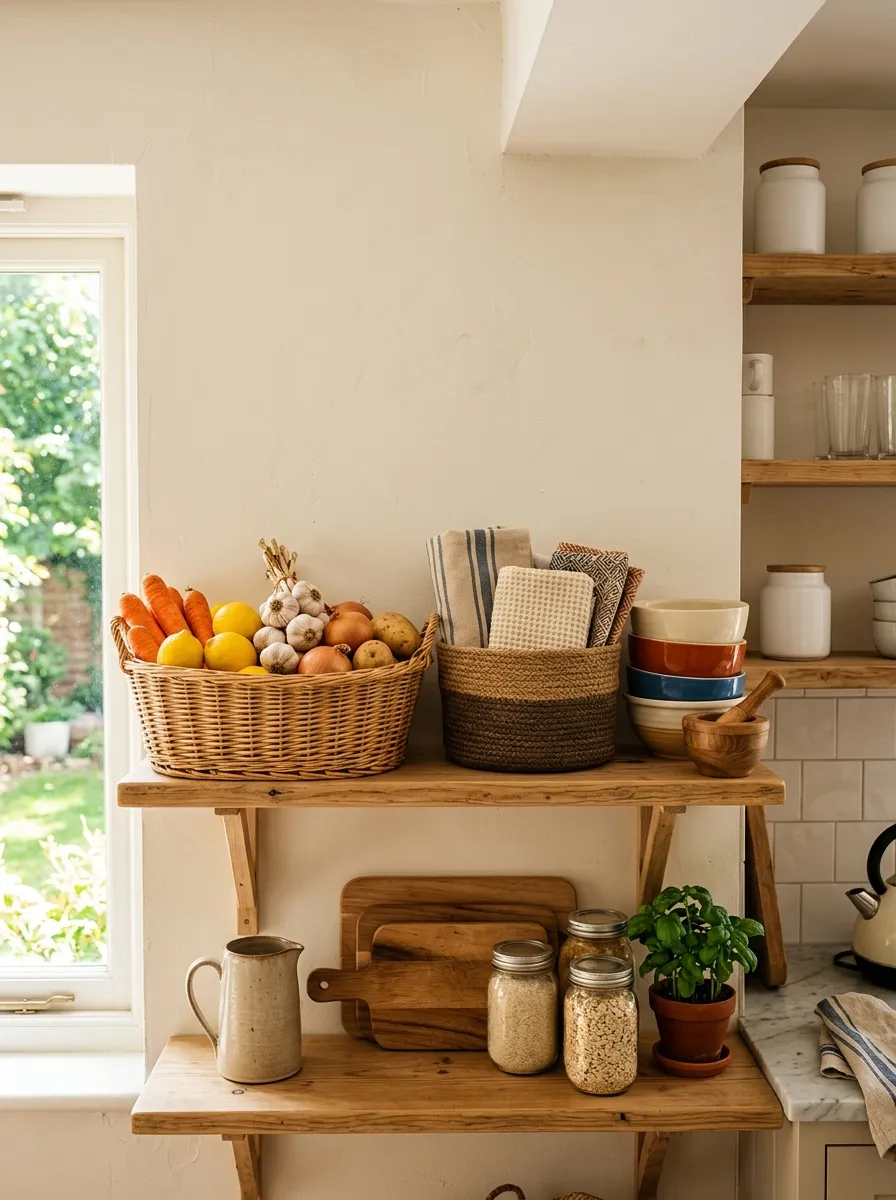
Use natural woven baskets on open shelves or under the counter to store produce, linens, or pantry items in plain sight. This low-cost solution keeps Japandi kitchen design functional, hiding everyday mess while still looking intentional and textured.
Choose baskets in similar sizes and materials to avoid visual clutter, stacking smaller ones inside larger ones when possible. This simple habit proves that smart storage and beautiful styling can absolutely exist in the same small space.
A great kitchen is not about chasing trends. It is about creating a space where calm, warmth, and daily function finally live together, which is exactly what Japandi kitchen design offers to anyone willing to slow down and simplify.
You do not need a full renovation to start. Pick one or two ideas from this list, try them in your own space, and let the rest of your Japandi style kitchen evolve naturally from there over time.